banner

custom cosmetic tubes

Home

custom cosmetic tubes

  • What Tube Diameter Should You Pick for Hand Cream and Body Lotion
    What Tube Diameter Should You Pick for Hand Cream and Body Lotion
    Oct 28, 2026
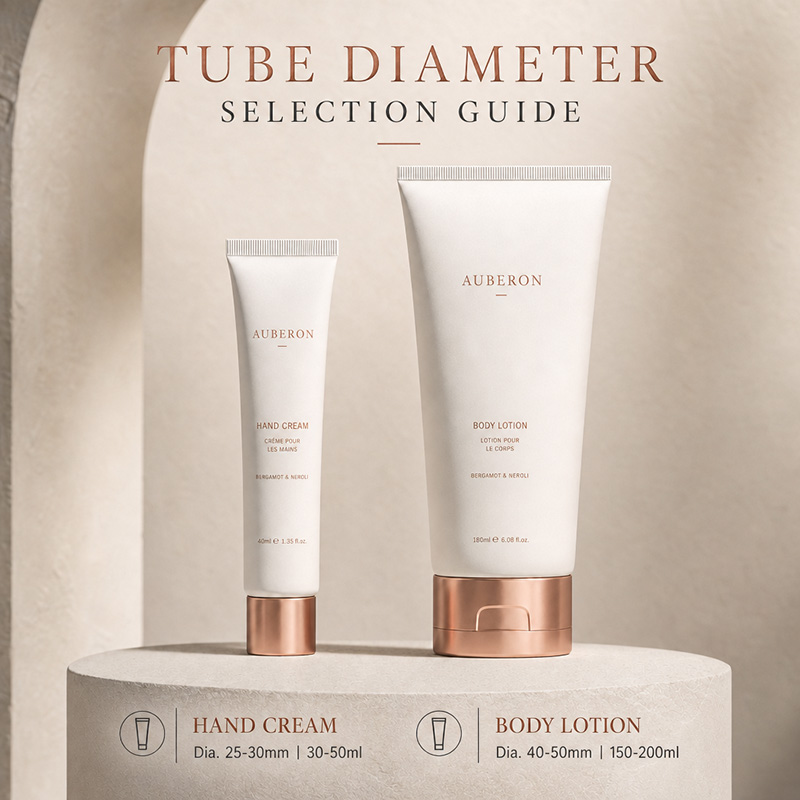
    What Tube Diameter Should You Pick for Hand Cream and Body Lotion Cosmetic Tube Packaging | Hand Cream & Body Lotion Packaging   Choosing the right tube diameter is an important step in developing cosmetic packaging for hand cream and body lotion. The diameter of a cosmetic tube affects not only its appearance but also its capacity, dispensing performance, ease of use, portability, and overall packaging cost.   For skincare brands, selecting the right tube size means finding a balance between product volume, formula viscosity, consumer preferences, and brand positioning. A compact hand cream tube may be ideal for travel or daily carry, while a larger body lotion tube may be more suitable for family use, frequent application, or retail products designed for long-term use.   However, there is no single tube diameter that works for every product. The ideal choice depends on the tube length, filling capacity, formula characteristics, cap design, and intended application.   In this guide, Runk Packaging explains how to select the right cosmetic tube diameter for hand cream and body lotion, compares common packaging sizes, and shares practical tips for brands looking for customized cosmetic tube packaging.     1. Why Does Tube Diameter Matter? When developing cosmetic tube packaging, brands often focus on capacity, color, printing, and decoration. Tube diameter deserves the same attention because it influences several important aspects of the packaging design.   1.1 Tube Capacity and Overall Dimensions Tube diameter is one of the main factors affecting how much product a tube can hold. For tubes with the same length, a wider diameter generally provides more internal volume. For example, a compact tube may be suitable for a 30 ml hand cream, while a wider or longer tube may be more appropriate for a 100 ml hand cream or a 200 ml body lotion. Nevertheless, diameter alone does not determine capacity. Tube length, shoulder design, headspace, and filling requirements also affect the final usable volume.   1.2 Dispensing Experience Hand creams and body lotions can have different viscosities. Some formulas are lightweight and fluid, while others are thick, rich, or butter-like. A suitable tube diameter helps create a convenient dispensing experience: Narrower tubes can offer better control for small amounts of hand cream. Medium-diameter tubes provide a balance between portability and dispensing convenience. Wider tubes can accommodate larger product volumes and may be suitable for frequent body care applications. The opening size, shoulder structure, cap design, and formula viscosity should also be evaluated during packaging development.   1.3 Portability and Appearance Packaging dimensions influence how consumers perceive and use a product. Smaller-diameter tubes can create a slim, lightweight appearance that works well for travel-size products, gift sets, and premium hand care collections. Wider tubes can offer a more substantial appearance and provide space for branding, ingredient information, and product instructions. The right diameter should complement your brand identity while remaining practical for everyday use.   1.4 Manufacturing and Packaging Costs Tube diameter can affect material consumption, tube length, cap compatibility, filling-line requirements, and shipping efficiency. A wider tube is not automatically more expensive in every case, because the final price also depends on the material structure, decoration, order quantity, and component design. Brands should compare the complete packaging specification rather than evaluating diameter alone.   2. Recommended Tube Diameters for Hand Cream and Body Lotion Different tube diameters suit different packaging purposes. The following chart provides a practical starting point for cosmetic packaging development. The capacity ranges are indicative, not fixed industry standards. Actual capacity varies with tube length, shoulder design, cap structure, and the manufacturer's available tooling.   ASME Packaging+2   Tube diameter Indicative capacity range Recommended applications 19–22 mm 5–30 ml Samples, mini hand creams, travel kits 25 mm 15–60 ml Portable hand cream, promotional skincare 30 mm 30–80 ml Daily hand cream, compact lotion 35 mm 40–120 ml Retail hand cream, sunscreen, medium lotion 40 mm 60–180 ml Body lotion, hand cream, personal care 50 mm 100–250 ml or more Large body lotion, body cream, family-size products Important: These are general reference ranges rather than guaranteed capacities for every diameter. Confirm the final dimensions against the manufacturer's specifications and a filled sample.     3. What Is the Best Tube Diameter for Hand Cream? Hand cream is frequently used throughout the day, so packaging should be comfortable to hold, easy to squeeze, and convenient to carry. Small hand cream: 15–30 ml Recommended starting diameters: 19–25 mm Small hand cream tubes are suitable for travel kits, promotional gifts, hotel amenities, trial products, and premium gift sets. Their compact size makes them easy to carry in a handbag, pocket, or cosmetic pouch. Smaller tubes are also useful when brands want to introduce a new formula without asking consumers to purchase a full-size product. When selecting a narrow tube, consider the available printing area and closure proportions. A tube that is too narrow may restrict the amount of branding and product information that can be displayed.   Standard hand cream: 30–75 ml Recommended starting diameters: 25–35 mm For everyday retail products, this range offers a practical balance between portability, visual appeal, and dispensing convenience. A 30–50 ml tube can work well for consumers who want a portable product, while a 60–75 ml format may be suitable for regular daily use at home, in the office, or while traveling. A 30 mm tube can create a relatively slim profile, whereas a 35 mm tube provides a wider front-facing area for logos, ingredient highlights, and product claims.   Large hand cream: 75–150 ml Recommended starting diameters: 35–40 mm Larger hand cream tubes may be suitable for intensive hand care, professional use, household products, or brands that prioritize value per unit. A wider diameter can help keep the tube body relatively compact for a given capacity. However, the finished dimensions should be checked to ensure that the tube remains comfortable to grip and easy to store. Runk Packaging recommendation: For a new hand cream packaging project, begin by comparing 25 mm, 30 mm, and 35 mm tube options. These provide useful alternatives for compact, standard, and larger retail formats.   4. What Is the Best Tube Diameter for Body Lotion? Body lotion generally requires more product per application than hand cream. As a result, body lotion packaging often uses larger capacities and wider tube bodies.     Travel-size body lotion: 30–60 ml Recommended starting diameters: 25–35 mm These tubes are suitable for travel skincare kits, hotel amenities, sample collections, and portable personal care products. A relatively narrow tube offers a lightweight appearance and can fit neatly into travel bags. For thicker body lotions, make sure the tube wall and opening provide a comfortable dispensing experience.   Standard body lotion: 80–150 ml Recommended starting diameters: 35–40 mm This is a useful starting range for brands developing everyday body lotion, moisturizing cream, and other personal care products. A 35 mm tube may suit a taller, slimmer design, while a 40 mm tube can provide a broader front panel and a more substantial appearance. The final selection should reflect the lotion's viscosity, the target market's preferences, and the intended retail positioning.   Large body lotion: 150–250 ml or more Recommended starting diameters: 40–50 mm Larger tubes are often suitable for family-size body care, intensive moisturizing products, body creams, and value-oriented product lines. A wider tube can accommodate a larger fill volume without requiring an excessively long body. It can also provide more room for product descriptions and visual branding. However, a larger diameter does not automatically guarantee easier dispensing. The tube's flexibility, wall thickness, formula viscosity, shoulder design, and opening size must work together.   5. Hand Cream vs. Body Lotion: Which Diameter Should You Choose? Factor Hand cream Body lotion Typical capacity 15–100 ml 50–250 ml or more Common starting diameter 25–35 mm 35–50 mm Main priority Portability and controlled dispensing Capacity and comfortable repeated use Common closure Screw cap or flip-top cap Flip-top cap or screw cap Typical positioning Travel, everyday care, premium hand care Daily moisturizing, family care, body care These are general packaging tendencies, not strict rules. A lightweight body lotion can work in a smaller tube, and a rich hand cream can be packaged in a wider format. The best decision comes from evaluating the intended fill volume, formulation, user experience, and visual design together.     6. How Does Tube Diameter Affect Tube Length? Tube diameter and tube length work together to determine the overall packaging dimensions. For the same nominal capacity, a narrower tube generally needs a longer body, while a wider tube may be shorter. This gives brands flexibility when designing packaging for different retail environments. For example, a 100 ml hand cream tube could be designed with a slimmer, taller profile or a wider, shorter profile, depending on the manufacturer's tooling and the desired proportions. When comparing different tube designs, consider the following: Slim and tall tubes: Suitable for minimalist packaging and products designed for portability. Medium-width tubes: Offer a balance between appearance, capacity, and branding space. Wide and short tubes: Can create a substantial shelf presence and may be convenient for larger-volume products. Do not determine the tube length from capacity alone. The shoulder, tube tail sealing area, cap height, and filling requirements all affect the finished package dimensions.   7. Which Material Is Best for Hand Cream and Body Lotion Tubes? The material structure should be selected according to the formula, product positioning, barrier requirements, and sustainability goals. Tube material Key characteristics Potential applications 2-layer PE Flexible squeeze performance and a simple material structure Standard hand creams and lotions, subject to compatibility testing 5-layer PE Multilayer structure that can provide enhanced barrier performance Formulas requiring additional protection PBL Plastic-based barrier laminate structure Cosmetic creams and personal care products ABL Aluminum-barrier laminate structure Formulas requiring strong barrier properties Sugarcane-based PE Renewable feedstock alternative for PE packaging Brands exploring renewable-material options The suitability of each material depends on the complete packaging specification. Barrier performance, recyclability, and formula compatibility should be evaluated for the actual structure rather than assumed from the material name alone. For brands developing customized packaging, Runk Packaging offers tube options that can be discussed in terms of diameter, capacity, material, color, and decoration.     8. What Other Factors Should You Consider Before Choosing a Tube Diameter? Selecting the correct diameter involves more than matching a tube to a target capacity. Formula viscosity A thick hand cream may require more squeezing force than a lightweight lotion. Test the formula in the actual tube to confirm that consumers can dispense it comfortably.   Cap and opening design Screw caps and flip-top caps offer different usage experiences. The opening size should allow the formula to flow appropriately without excessive leakage or dispensing difficulty.   Printing and decoration A wider tube generally offers more front-facing space for a logo, product name, ingredients, and other artwork. Smaller tubes may require a more streamlined design. Common customization options include: Color matching using the Pantone Color Chart Silk screen printing Offset printing Hot stamping Frosted, matte, or glossy finishes Plating and labeling, depending on component compatibility     Filling equipment compatibility The tube diameter, length, tail structure, and closure must be compatible with the filling and sealing process. Confirm the technical specifications with the packaging manufacturer and filling facility before placing a bulk order.   Sustainability requirements If sustainability is a priority, discuss material composition, recycled or renewable content, and the packaging's end-of-life requirements. The best choice depends on the target market and the applicable recycling infrastructure.   9. How to Select the Right Tube Diameter for Your Brand For B2B buyers, the following process can help reduce unnecessary sampling and design changes.   Step 1: Define the target capacity Decide whether the product is a 30 ml travel hand cream, a 50–75 ml retail hand cream, or a 150–200 ml body lotion.       Step 2: Compare available diameters Request available tooling and drawings for two or three suitable diameter options.       Step 3: Confirm material and closure Choose the tube structure, shoulder, cap, and opening according to the formula and desired dispensing experience.       Step 4: Test samples before mass production Fill the sample tubes with the actual formula and evaluate squeezing force, leakage, cap fit, appearance, and filling compatibility.     10. Frequently Asked Questions (FAQ) Q1: What is the most common diameter for hand cream tubes? Diameters of approximately 25–35 mm are useful starting points for many hand cream projects. Smaller formats may use narrower tubes, while larger hand cream packages may require a 35–40 mm diameter. The ideal size depends on capacity, tube length, formula viscosity, and design requirements.   Q2: What diameter is suitable for a 50 ml hand cream tube? A diameter of approximately 25–35 mm is a reasonable starting range for a 50 ml hand cream tube. A narrower tube can create a taller profile, while a wider tube may offer a shorter body and more front-facing design space. Confirm the final capacity with the manufacturer's technical drawings and samples.   Q3: What diameter should I choose for a 100 ml body lotion tube? A diameter of around 35–40 mm is a useful initial option for a 100 ml body lotion tube. A 35 mm tube may create a slimmer appearance, while a 40 mm tube may offer a wider package profile. Actual capacity depends on the tube's length and construction.   Q4: Can two tubes with the same diameter have different capacities? Yes. Tube length is another major factor in determining capacity. Two tubes with the same diameter can hold different amounts of product if their lengths or shoulder designs differ.   Q5: Is a wider tube always easier to squeeze? No. Dispensing performance also depends on material flexibility, wall thickness, formula viscosity, opening size, and tube construction. A wider tube may provide more internal volume, but a filled sample test is still necessary.   Q6: Which cap is better for hand cream, a screw cap or a flip-top cap? A screw cap can be suitable for premium, travel-size, or minimalist hand cream packaging. A flip-top cap is convenient for frequent use because it can be opened and closed quickly. The best choice depends on the intended user experience, leakage requirements, and packaging design.   Q7: Can I customize the diameter, capacity, color, and printing of cosmetic tubes? Customization depends on available tooling, technical feasibility, and order requirements. Buyers can discuss tube diameter, capacity, color, material structure, cap style, and decoration options with the manufacturer. Artwork and samples should be approved before mass production.   Q8: What information should I provide when requesting a cosmetic tube quotation? To help the manufacturer recommend suitable options, prepare the following information: Product type: hand cream, body lotion, or body cream Required capacity in milliliters Preferred diameter or overall dimensions, if available Formula viscosity and compatibility requirements Preferred material structure Cap type and color Printing and surface decoration requirements Estimated order quantity and delivery destination If the diameter has not yet been determined, you can start with the required capacity and product application.     Conclusion: Choose the Right Tube Diameter for Better Cosmetic Packaging Choosing the right tube diameter for hand cream and body lotion requires balancing capacity, appearance, dispensing performance, and manufacturing requirements.   As an initial guide, 25–35 mm is a practical range to explore for hand cream, while 35–50 mm is a useful starting range for larger body lotion formats. Smaller diameters can suit travel-size products, and the final selection should always be verified against the required capacity and available tooling.   For cosmetic brands, the best packaging solution is not necessarily the widest or narrowest tube. It is the one that fits the formula, supports the desired user experience, and reinforces the brand's market positioning.   About Runk Packaging Runk Packaging is a cosmetic packaging manufacturer specializing in customized plastic packaging tubes, bottles, jars, and paper boxes. We support OEM and ODM packaging projects with options for tube capacity, diameter, material, color, cap style, printing, and surface decoration.   Whether you are developing a new hand cream line, upgrading your body lotion packaging, or sourcing cosmetic tubes for an established brand, choosing the right specifications at the beginning can help streamline product development.       Contact Runk Packaging to discuss your cosmetic tube packaging requirements and request suitable options for your next project.     Contact Information Email: sales@runkgroup.com  | WhatsApp: +62 812-9504-2586 Tube Website: https://www.runkgroup.com Bottle & Jar Website: https://www.runkbottle.com Alibaba International: https://runkpackaging.en.alibaba.com Based in Guangzhou, China — Serving Beauty Brands Worldwide.    
    Read More
  • How to Choose the Right Cosmetic Tube Packaging for Your Skincare Brand
    How to Choose the Right Cosmetic Tube Packaging for Your Skincare Brand
    Sep 15, 2026
    How to Choose the Right Cosmetic Tube Packaging for Your Skincare Brand Choosing the right cosmetic tube packaging is an important decision for any skincare brand. Packaging does much more than hold a formula. It protects the product, influences the user experience, communicates the brand image, and can even affect production, transportation, and long term product stability.   With so many cosmetic tube options available today, including PE tubes, PBL tubes, ABL tubes, PCR materials, sugarcane based materials, different caps, applicators, capacities, and decoration methods, it can be difficult to know which option is right for your skincare product.   The best cosmetic tube is not necessarily the most expensive or the most visually attractive one. It is the one that creates the right balance between formula compatibility, product protection, user experience, brand positioning, sustainability, customization, and cost.   In this guide, we will explain the key factors skincare brands should consider when choosing cosmetic tube packaging and how Runk can help develop a packaging solution that matches your product and brand.     1. Start With Your Skincare Formula The first question should not be: What does the tube look like? Instead, start with: What will be inside the tube? Different skincare formulas have different requirements. A lightweight cleanser, rich body cream, sunscreen, facial moisturizer, exfoliating scrub, or active skincare treatment may require different packaging structures. For example, cosmetic tubes are commonly used for: Facial cleanser Facial cream Moisturizer Sunscreen Hand cream Body lotion Body cream Body scrub Eye cream Sleeping mask Facial mask BB cream Hair care products Formula viscosity, sensitivity to oxygen or light, chemical compatibility, dispensing requirements, and expected shelf life should all be considered before selecting the final tube structure. A packaging sample may look excellent during the initial development stage, but the actual filled product should be tested with the selected packaging to evaluate compatibility, sealing, leakage, deformation, discoloration, dispensing performance, and transportation conditions. This is why packaging selection should be considered together with the formula rather than as a separate design decision.     2. Choose the Right Cosmetic Tube Material Material is one of the most important factors when selecting cosmetic tube packaging. Different materials provide different levels of flexibility, barrier protection, appearance, sustainability options, and cost efficiency. Common cosmetic tube materials and structures include PE, PBL, ABL, PCR, and bio based materials such as sugarcane based PE.     PE Cosmetic Tubes PE or polyethylene is one of the most widely used materials for cosmetic tube packaging. PE tubes are lightweight, flexible, easy to squeeze, and suitable for a wide range of skincare and personal care applications. They can also be customized in different colors, capacities, diameters, shapes, closures, and decoration styles. PE cosmetic tubes are commonly suitable for: Facial cleansers Hand creams Body lotions Moisturizers Sunscreens Hair care products Body care products For brands looking for a practical combination of flexibility, appearance, customization, and cost efficiency, PE tubes can be an excellent starting point.   PBL Cosmetic Tubes PBL stands for Plastic Barrier Laminate. PBL tubes use a multilayer plastic structure designed to provide enhanced barrier properties while maintaining a flexible tube format. Depending on the structure and formulation requirements, PBL tubes can be considered for skincare products that require additional protection compared with a basic tube structure. PBL can also provide a smooth surface for high quality decoration and premium packaging designs. For brands that want to balance product protection, appearance, flexibility, and sustainability considerations, PBL may be an attractive option. However, the exact structure should always be selected according to the formulation and required packaging performance.   ABL Cosmetic Tubes ABL stands for Aluminum Barrier Laminate. ABL tubes contain an aluminum barrier layer within the laminate structure, providing strong protection against light and helping reduce the transmission of oxygen and moisture. This can be useful for formulas that require a higher level of barrier protection. ABL tubes are often considered for products where formula protection is an important priority. However, brands should not select ABL simply because it offers a higher barrier. The complete packaging system, formula, filling process, transportation conditions, and sustainability goals should all be considered.   PCR Cosmetic Tubes PCR stands for Post Consumer Recycled material. PCR packaging allows brands to incorporate recycled material into their packaging strategy and can support sustainability focused product positioning. PCR materials may be suitable for skincare brands that want to reduce reliance on virgin plastic while maintaining a familiar cosmetic tube format. The exact PCR percentage and structure should be evaluated based on the product requirements, appearance expectations, regulatory requirements, and target market. For brands making environmental claims, it is also important to ensure that sustainability claims accurately reflect the actual packaging structure and applicable market requirements.     Sugarcane Based Materials Sugarcane based PE is another material option for brands exploring bio based packaging solutions. It can help brands develop packaging with a different sustainability story while maintaining the familiar performance characteristics of polyethylene based packaging. This option can be particularly interesting for skincare brands with a natural, clean beauty, or sustainability focused positioning. As with any packaging material, the final selection should be based on the complete product and packaging requirements rather than marketing positioning alone.   3. Select the Right Tube Capacity The capacity of your cosmetic tube should match both the product usage and your target customer. A small tube can be convenient for travel, sampling, trial products, and premium skincare products. Larger tubes are often more suitable for products designed for frequent or high volume use. Common applications include: Capacity Typical Applications 5ml to 20ml Eye cream, sample products, travel skincare 20ml to 50ml Facial cream, sunscreen, hand cream 50ml to 100ml Cleanser, moisturizer, sunscreen 100ml to 200ml Body lotion, body cream, hair care 200ml and above Body care and professional use The ideal capacity depends on your formula, recommended usage, retail positioning, customer habits, and target market. For example, a 40ml to 120ml tube can be a flexible option for products such as hand cream, sunscreen, facial cream, cleanser, body lotion, and body scrub.     4. Consider Tube Diameter and Shape Tube diameter affects more than appearance. It also influences: Grip Squeezing experience Product dispensing Visual proportions Filling requirements Label and printing area Shelf appearance Slim tubes can create a lightweight and portable appearance, while wider tubes can provide more visual impact and a larger decoration area. Runk provides different cosmetic tube diameter options, including approximately 13mm, 16mm, 19mm, 22mm, 25mm, 30mm, 35mm, 40mm, 45mm, and 50mm, as well as customized options depending on the product structure. The tube shape can also be customized according to brand requirements. A round tube may provide a classic skincare appearance, while an oval or specially shaped tube can help a product stand out on retail shelves.   5. Choose the Right Cap or Applicator The closure is an important part of the overall packaging experience. A good tube body combined with the wrong closure can still create a poor user experience. Depending on the product, brands can consider: Flip top caps Screw caps Nozzle caps Long nozzle applicators Roller applicators Massage applicators Metal tip applicators Airless tube systems For a facial cleanser, a simple flip top or screw cap may be sufficient. For an eye cream, a precision applicator may provide better control. For a massage cream or treatment product, a roller or massage applicator can create a more distinctive user experience. The dispensing system should always match the formula viscosity and intended application method.       6. Think About Your Brand Identity Cosmetic packaging is also a visual communication tool. Before selecting colors and decoration, consider how you want customers to perceive your skincare brand. For example: Minimalist Skincare Clean colors, simple typography, matte surfaces, and restrained decoration can create a modern and professional appearance.   Premium Skincare Metallic effects, hot stamping, glossy finishes, sophisticated colors, and high quality printing can create a more luxurious appearance.   Natural Beauty Soft colors, simple structures, and sustainability focused materials can support a natural or clean beauty positioning.   Clinical Skincare Simple layouts, white or neutral colors, clear product information, and functional packaging structures can communicate a scientific and professional image. Runk supports customized colors, materials, tube structures, caps, printing, and surface finishing to help brands develop packaging that fits their visual identity.     7. Select the Right Decoration Method Decoration is another important part of cosmetic tube development. Depending on the desired appearance, brands can consider: Offset printing Silk screen printing Hot stamping Labeling Matte finish Glossy finish Frosted finish Pearl effects Metallic effects The decoration method should be selected based on artwork, material, quantity, budget, and desired visual effect. For example, a simple logo and product name may work well with silk screen printing, while premium metallic details may benefit from hot stamping. For large areas of detailed graphics, offset printing may provide more design flexibility. A professional packaging supplier can help evaluate which decoration method is most suitable for your artwork and selected tube structure.     8. Consider Sustainability From the Beginning Sustainability should not be treated as an afterthought. If environmental responsibility is part of your brand strategy, it should be considered during the initial packaging development stage. Depending on the project, skincare brands may consider: PCR materials Sugarcane based materials Mono material structures Lightweight packaging Reduced material usage Recyclability considerations Optimized packaging dimensions However, sustainable packaging is not simply about choosing a material labeled as eco friendly. Brands should also consider the complete packaging structure, closure, decoration, transportation, product protection, and applicable recycling systems in the target market. At Runk, we work with customers to evaluate suitable material options based on product requirements and packaging goals rather than applying one material solution to every project.   9. Do Not Forget Formula Compatibility Testing One of the most important steps in cosmetic packaging development is compatibility testing. Even when a tube is visually perfect, the packaging still needs to work properly with the actual formula. Testing may include: Formula compatibility Leakage testing Sealing testing Cap tightness testing Dispensing testing Drop testing Transportation testing Appearance inspection Printing inspection Usage testing Factors such as temperature, storage time, transportation conditions, formula ingredients, and packaging materials can all affect the final result. For this reason, brands should test the actual filled product rather than relying only on an empty packaging sample.   10. Balance Quality and Cost The cheapest cosmetic tube is not always the most cost effective choice. A low unit price may become less attractive if the packaging creates problems during filling, transportation, storage, or consumer use. At the same time, choosing an unnecessarily complicated packaging structure can increase costs without providing meaningful benefits. A good packaging solution should balance: Function + Appearance + Quality + Sustainability + User Experience + Cost This is especially important for new skincare brands that need attractive packaging while maintaining a controlled product development budget.   11. Why Work With Runk for Custom Cosmetic Tubes? Runk is a professional cosmetic packaging manufacturer serving beauty and personal care brands worldwide. With more than 15 years of average industry experience across the Runk team, the company provides customized packaging solutions for cosmetic tubes, bottles, jars, Airless packaging, and paper boxes. For cosmetic tubes, Runk supports OEM and ODM customization across multiple aspects of packaging development.   Custom Tube Solutions Runk can support customization of: Tube diameter Tube capacity Tube shape Tube material Tube color Cap style Applicator Printing Surface finishing Runk's cosmetic tube solutions include PE, PBL, ABL, PCR, and selected bio based material options according to project requirements. The company also supports different tube structures and applications for skincare, hair care, body care, and beauty products.   One Stop Cosmetic Packaging In addition to cosmetic tubes, Runk provides bottles, jars, Airless packaging, and paper boxes. This gives brands the opportunity to source multiple packaging components from one experienced packaging partner and maintain greater consistency across a product line.   Quality Control Runk's quality management process includes raw material inspection and production quality control, together with testing such as color testing, compatibility testing, sealing testing, scratch testing, drop testing, usage testing, and transportation testing for newly developed packaging projects. For international beauty brands, Runk also provides global customer support and has an Indonesia office serving customers in Southeast Asia.     Frequently Asked Questions About Cosmetic Tube Packaging 1. What is the best cosmetic tube material for skincare products? There is no single best material for every skincare product. PE, PBL, ABL, PCR, and bio based materials each have different characteristics. The best choice depends on the formula, barrier requirements, appearance, sustainability goals, target market, and budget. The actual filled product should be tested with the selected tube before mass production.   2. Are cosmetic tubes suitable for sunscreen? Yes. Cosmetic tubes are widely used for sunscreen products. However, sunscreen formulas can have specific packaging compatibility and protection requirements. The appropriate tube structure, material, cap, and decoration should be selected according to the formulation and testing results.   3. Can cosmetic tubes be used for facial cleanser? Yes. Facial cleanser is one of the common applications for cosmetic squeeze tubes. A flexible PE tube with a suitable cap can provide convenient dispensing and good portability for daily facial cleansing products.   4. Can I customize the color of a cosmetic tube? Yes. Custom colors can be developed according to your brand requirements, including standard color references and customized color matching. Color selection should be confirmed through samples before mass production because the final appearance can be affected by the material and decoration process.   5. Can I print my logo directly on the tube? Yes. Depending on the selected tube structure and artwork, logo and product information can be applied using different decoration methods such as offset printing, silk screen printing, hot stamping, or labeling.   6. Can the tube shape and size be customized? Yes. Runk supports customized tube diameters, capacities, shapes, colors, caps, applicators, and decoration methods. Customized dimensions should be evaluated according to the filling process, product capacity, formula viscosity, and intended user experience.   7. What cosmetic products can be packaged in tubes? Cosmetic tubes can be used for many skincare and personal care products, including: Facial cleanser Facial cream Sunscreen Moisturizer Eye cream Hand cream Body lotion Body scrub Facial mask Hair mask Hair treatment BB cream Personal care products The appropriate tube structure should be selected according to the formula and application.   8. What is the difference between PE, PBL and ABL tubes? The main difference is their material structure and barrier performance. PE tubes use polyethylene based structures and are widely used for flexible cosmetic packaging. PBL tubes use a plastic barrier laminate structure and can provide enhanced barrier performance. ABL tubes use an aluminum barrier layer and are designed for applications requiring strong barrier protection. The right choice depends on the specific product rather than simply choosing the material with the highest barrier performance.   9. Are PCR cosmetic tubes more sustainable? PCR materials can help brands incorporate recycled content into their packaging. However, sustainability depends on the complete packaging system, including material composition, PCR percentage, product design, transportation, recycling infrastructure, and the requirements of the target market. Brands should make environmental claims based on verified packaging specifications and applicable regulations.   10. What is the MOQ for custom cosmetic tubes? MOQ depends on the tube structure, material, capacity, decoration method, customization requirements, and production process. Standard products and highly customized packaging projects may have different MOQ requirements. Runk can review your project specifications and provide a more accurate quotation and MOQ recommendation.   11. How long does custom cosmetic tube production take? Production time depends on the product structure, customization requirements, sampling process, decoration, quantity, and production schedule. For this reason, it is best to confirm the timeline after the packaging specifications and sample requirements have been finalized.   12. Can Runk provide samples before mass production? Yes. Sample development is an important part of customized cosmetic packaging. Samples allow brands to evaluate the appearance, dimensions, color, closure, dispensing experience, and compatibility with their product before proceeding to mass production.     13. What information should I provide when requesting a cosmetic tube quotation? To receive a more accurate quotation, you can provide: Product type Tube capacity Preferred material Tube diameter Tube shape Cap or applicator Color Logo or artwork Decoration requirements Estimated order quantity Target market Delivery destination Reference images, drawings, or existing packaging samples can also help the packaging team understand your requirements more quickly.   14. Can Runk help if I do not have a complete packaging design? Yes. Runk provides both OEM and ODM packaging support. If you already have a complete packaging specification, Runk can manufacture according to your requirements. If you only have a product concept, reference image, capacity requirement, or basic brand direction, the Runk team can help evaluate suitable packaging options and develop a customized solution.     Final Thoughts: Choose Packaging That Works for Your Brand Choosing the right cosmetic tube packaging is not simply a question of choosing a beautiful tube. The right solution should protect the formula, provide a comfortable user experience, match the brand identity, support production requirements, meet sustainability goals where appropriate, and remain commercially practical. Before making a final decision, consider these six questions: Does the material match my formula? Does the tube provide sufficient product protection? Is the capacity suitable for my customers? Does the design communicate my brand identity? Does the packaging support my sustainability goals? Can the supplier provide consistent quality and reliable customization? By considering these factors together, skincare brands can make more informed packaging decisions and avoid unnecessary changes later in the development process.   At Runk, we believe cosmetic packaging should be developed around the product, the brand, and the customer.   Whether you are launching a new skincare product, upgrading existing packaging, developing a sustainable product line, or looking for a reliable OEM and ODM cosmetic packaging partner, Runk can help you explore suitable cosmetic tubes, bottles, jars, Airless packaging, and paper box solutions.   Have a cosmetic packaging project in mind? Share your product type, capacity, preferred material, quantity, and packaging requirements with the Runk team. We can help you evaluate suitable packaging options and develop a customized solution for your skincare brand.     Contact : info@runkgroup.com | +86-13128608159 Runk Website : https://www.runkgroup.com/ https://www.runkbottle.com/ https://runkpackaging.en.alibaba.com/ Based in Guangzhou, China – serving beauty brands worldwide.  
    Read More

  • Runk Custom Plastic Cosmetic Packaging Tubes for Skincare Brands
    Runk Custom Plastic Cosmetic Packaging Tubes for Skincare Brands
    May 12, 2026
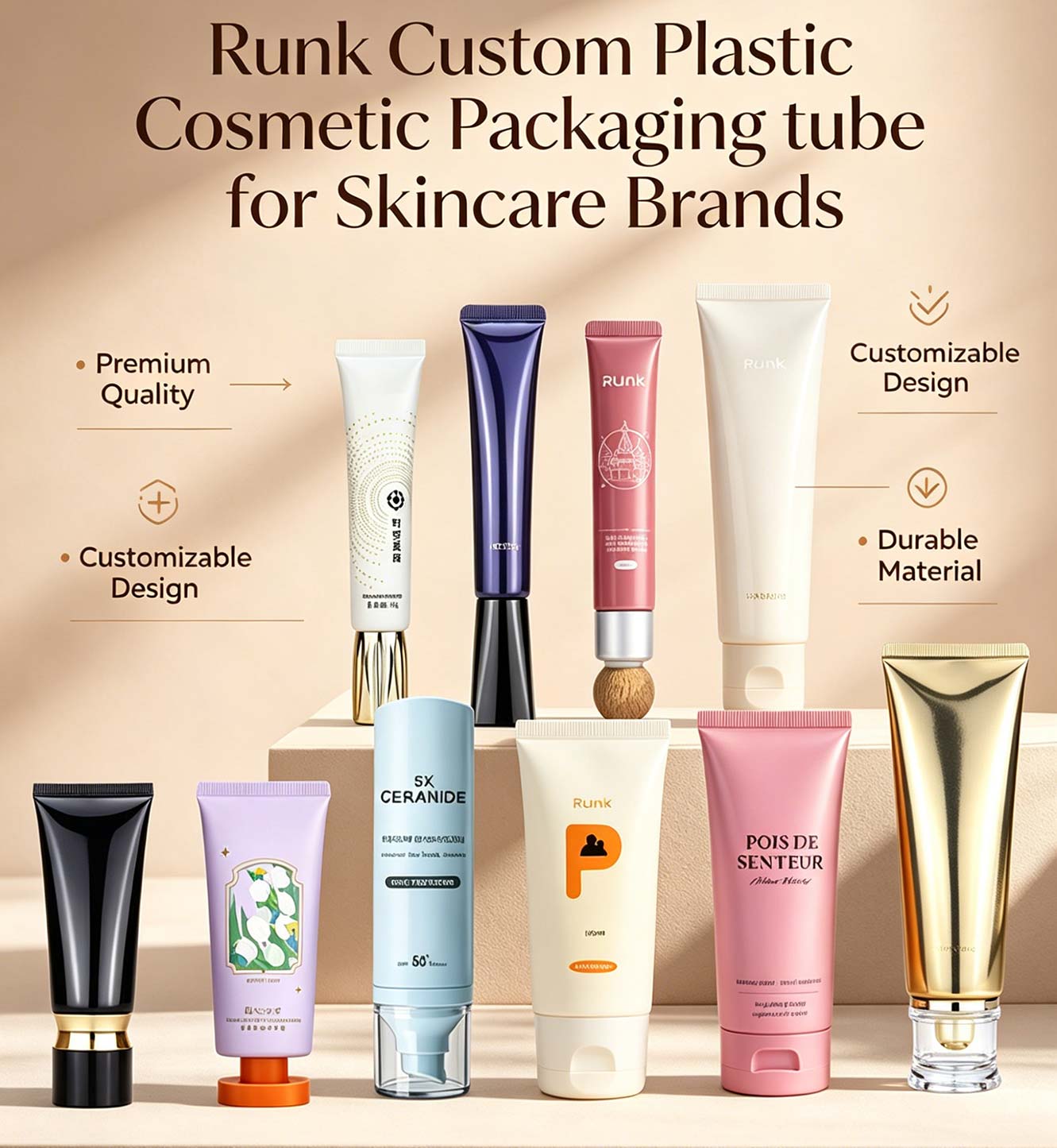
    Runk Custom Plastic Cosmetic Packaging Tubes for Skincare Brands In today’s highly competitive beauty industry, packaging is more than just a container — it is an important part of brand identity, customer experience, and product protection. At Runk Cosmetic Packaging, we specialize in providing custom plastic cosmetic packaging tubes designed to help skincare brands create a professional and memorable market presence.     One-Stop Cosmetic Tube Packaging Solutions Runk offers a wide range of cosmetic packaging tubes suitable for various skincare and beauty products, including: Facial cleansers Sunscreen creams Eye creams Hand creams BB & CC creams Body lotions Serums and gels Lip care products Our packaging tubes are available in multiple capacities, shapes, and decoration styles to meet different brand positioning needs — from minimalist skincare lines to luxury beauty collections.     Customization Options for Your Brand Every skincare brand has its own identity. Runk provides flexible OEM & ODM customization services to help customers create unique packaging solutions. Custom Tube Materials We offer: PE tubes PCR eco-friendly tubes ABL & PBL laminated tubes Sugarcane bio-based materials These materials help brands balance functionality, sustainability, and premium appearance.     Diverse Decoration Processes Our advanced printing and decoration technologies include: Silk screen printing Offset printing Hot stamping Matte & glossy finishes Gradient color coating UV printing With rich customization capabilities, Runk can help your products stand out both online and on retail shelves.     Functional and User-Friendly Design Besides visual appeal, cosmetic packaging must also provide excellent user experience. Runk focuses on practical and innovative tube packaging structures, including: Flip-top caps Screw caps Nozzle applicators Roller ball massage applicators Airless tube designs These packaging options improve product dispensing while enhancing consumer convenience.   Eco-Friendly Cosmetic Packaging Trends Sustainability has become an important focus for global skincare brands. Runk actively supports environmentally friendly packaging development by offering recyclable and PCR cosmetic tubes to reduce environmental impact. By combining sustainable materials with stylish packaging design, brands can meet growing consumer demand for eco-conscious beauty products.   Why Choose Runk Cosmetic Packaging? As a professional cosmetic packaging manufacturer, Runk provides: Stable product quality Competitive factory pricing Fast sampling support Flexible customization services Professional export experience One-stop packaging solutions Whether you are launching a new skincare line or upgrading your current packaging, Runk can provide reliable and creative packaging solutions tailored to your business needs.     Partner with Runk for Your Next Skincare Packaging Project Packaging is often the first interaction consumers have with your brand. High-quality cosmetic tubes can help improve product value, strengthen brand recognition, and enhance customer trust.   If you are looking for custom plastic cosmetic packaging tubes for your skincare brand, Runk is ready to support your project with professional manufacturing and innovative packaging solutions.   Contact : info@runkgroup.com | +86-13128608159 Runk Website : https://www.runkgroup.com https://www.runkbottle.com https://runkpackaging.en.alibaba.com Based in Guangzhou, China – serving beauty brands worldwide.    
    Read More
leave a message

leave a message
If you are interested in our products and want to know more details,please leave a message here,we will reply you as soon as we can.
submit

home

products

WhatsApp

Contact Us